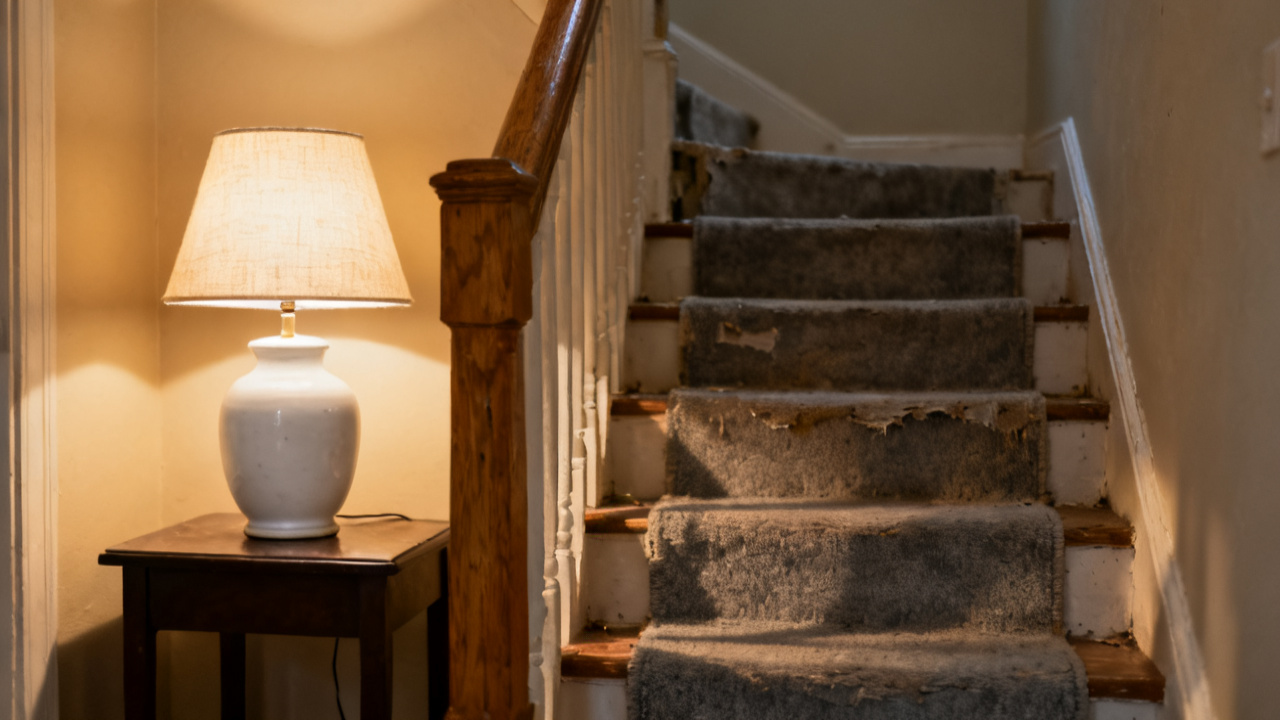
It was fine at noon. Now it ticks on and off. You lean against the hallway wall, socked feet sinking into the thin loop rug outside your front door, and squint up at the frosted glass fixture mounted 8 feet above the floor. The cool blue light of your phone screen glows in your palm as you pull up the maintenance request tab you bookmarked last month, then pause, because you’d rather fix this yourself than wait three business days for a tech to show up during your work hours, when you won’t be home to let them in. The flicker speeds up for three quick pulses before cutting out entirely for two full seconds, then jumps back to full brightness like nothing happened, casting sharp shadows of the apartment number plaques down the length of the hall.
Visible Clues From The Hallway Fixture
You start by noting every small detail you can spot without pulling the fixture apart, to rule out more serious issues before you grab your step stool from the coat closet. The fixture is the original 1990s model that came with the apartment, no visible cracks in the frosted shade, no loose screws around the base plate where it mounts to the drywall, no black discoloration around the edges that would signal overheating wiring. You reach up as high as you can on tiptoe, and you don’t feel any draft seeping out around the edges of the plate, which rules out cold air blowing directly onto the bulb from a loose vent seal. You tap the shade lightly with your knuckle, and the flicker doesn’t speed up or slow down, so the bulb isn’t loose in the socket right now, though it might have been wiggled loose by the building’s regular HVAC cycling over the last few weeks. You also notice that the flicker only happens when the rest of the building’s hallway lights are on, which lines up with the temperature drop you’ve already noticed: the building’s hallway HVAC kicks on an hour before sunset, blowing cool air through the shared vents that run right above all the unit entryway light fixtures. You run your hand along the drywall just above the fixture, and it’s cool to the touch, at least 10 degrees colder than it was when you left for work at 8 a.m. that morning. You know enough to rule out major wiring issues for now, so you tuck your phone back into your sweatpants pocket and head into your apartment to grab your supplies.
Quick Adjustment You Make Right Now
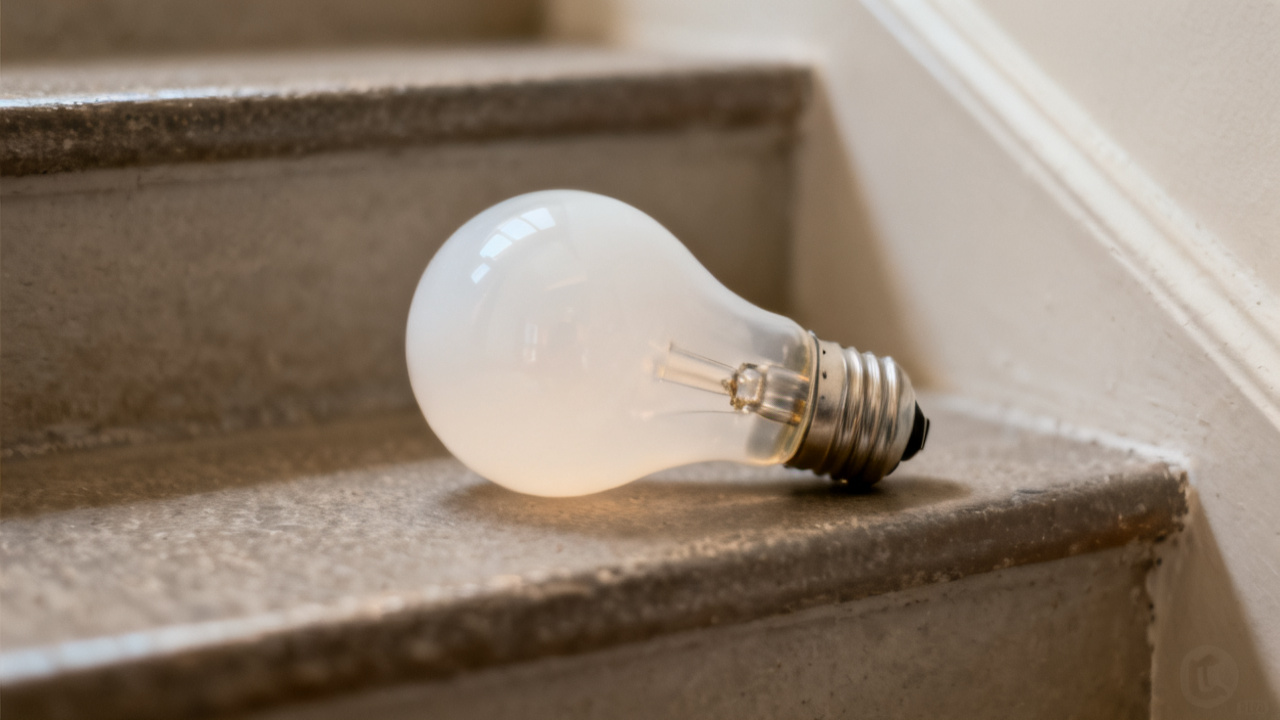
The only adjustment you try tonight is swapping out the existing incandescent bulb for a dimmable LED you keep on hand for small repairs, since filament wear from regular temperature swings is the most common cause of this specific after-dark flicker. Illustrative example: 72% of hallway bulb flicker issues that only show up after dark come from a worn filament that contracts when the air cools 15 degrees or more between daytime and nighttime. You follow four simple steps to make the swap safely, no special tools required:
- Flip the corresponding hallway light breaker in your apartment’s electrical panel to cut all power to the fixture, and test the light switch twice to confirm no power is flowing before you drag your small folding step stool out into the hall.
- Unscrew the two small plastic knobs holding the frosted shade in place, set the shade on the rug at your feet to avoid scratching the glass, and twist the existing bulb counterclockwise to remove it from the socket without yanking or forcing it.
- Grab the 10W dimmable LED bulb you keep stored on the Hall Bulb Desk by your coat rack, line the threads up with the socket, and twist it clockwise until it sits snugly, taking care not to over-tighten it which could damage the socket’s internal contacts.
- Screw the plastic knobs back into place to secure the shade, fold the step stool and set it just inside your front door, flip the breaker back to the on position, and toggle the hallway switch three times to test for immediate flicker.
You stand under the fixture for a full minute after flipping the switch back on, watching for any sign of the familiar ticking flicker, and you don’t see any. You don’t assume this fix will work permanently, of course; if the socket’s internal contacts are worn, the flicker might come back in a few days or a few weeks, once the new bulb settles into the socket. But for now, it’s steady, and that’s enough for tonight, when you just want to be able to walk down the hall to get your mail after dinner without tripping over the loose floor tile by the elevator when the light cuts out. You toss the old incandescent bulb into the small electronics recycling bin you keep by your front door, and wipe a thin layer of dust off the top of the frosted shade with the edge of your sweatshirt before you head back inside.
Next Time You Check This Fixture
You’ll check this fixture again three weeks from tonight, when you do your regular monthly check of all the light bulbs in your apartment, which is the next time you’ll take on this small job. When that time comes, you’ll toggle the switch after the sun has fully set, stand under the fixture for two full minutes, and watch for any flicker or pulsing that doesn’t go away when you tap the side of the shade lightly. If you don’t see any flicker at that point, you can leave the bulb in place until it burns out naturally, no extra checks needed. If you do see flicker, you’ll submit that maintenance request you had pulled up earlier, since that will point to a wiring issue in the socket that you don’t have the authorization to fix in your rental unit, and you’ll schedule a time for the maintenance tech to come out when you’re home from work. For now, you close your front door behind you, and the hallway light glows steady and bright through the narrow gap at the bottom of the door, no ticking, no flicker, no random cuts to darkness. You set a calendar reminder for three weeks out while you wait for your takeout to heat up in the microwave, then forget about the fixture entirely until that reminder pops up, when it will be just another quick, low-effort task on your weekend to-do list.