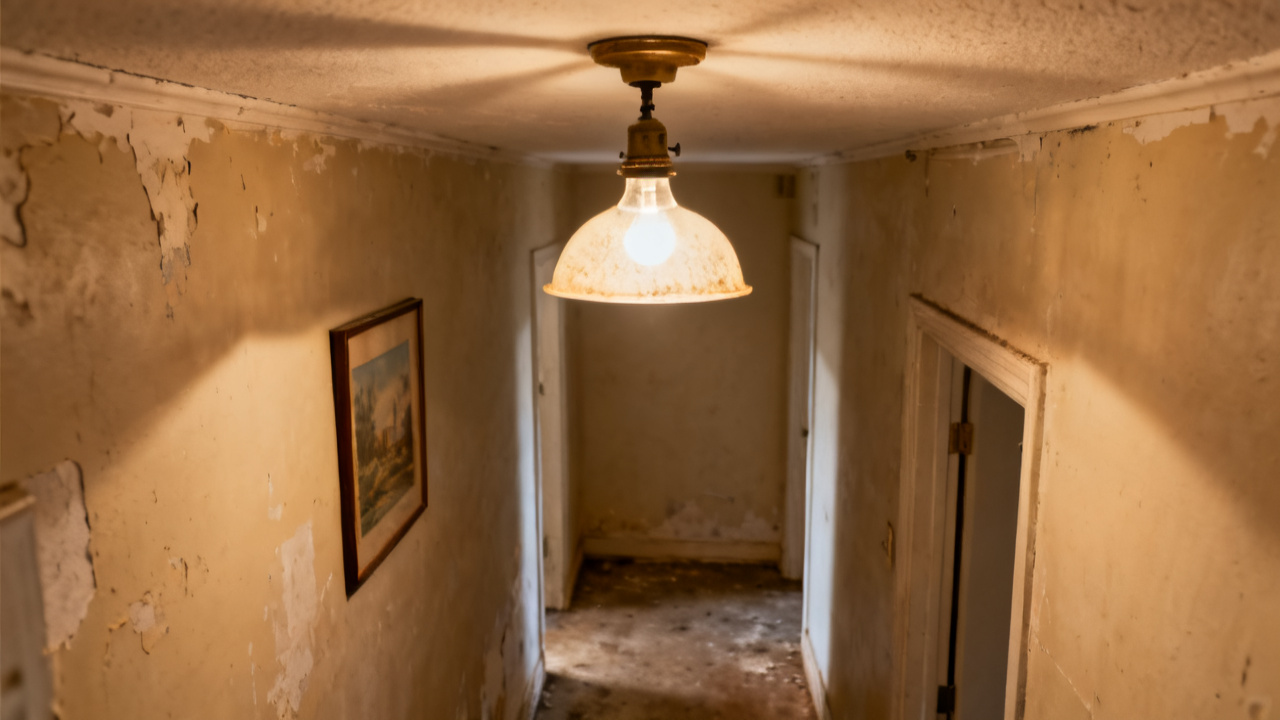
Three lights are on. You are leaving the room. The plastic light switch pull tab you fished out of the junk drawer last week hangs loose in your palm, its soft matte edge digging faintly into the meat of your thumb. The overcast sky outside the hallway window casts just enough dim gray glow to see your scuffed white sneakers and the edge of the Hall Bulb Desk half-hidden by the stairwell landing, no artificial light required to navigate the 20 feet of linoleum between where you stand and the front door. Your canvas tote bag is slung over one shoulder, keys already jangling in your other hand, so you only have a few seconds to wrap this up before you lock the front door and head to your bus stop, which is scheduled to arrive in six minutes.
Ambient light assessment
You first confirm no lights are necessary for anyone using the space in the immediate future, running through four quick checks to be sure before you make any adjustments:
- Hold your hand 12 inches in front of your face and count the number of visible fingerprints on your knuckle to confirm you have enough light to navigate the space without artificial support.
- Glance toward the stairwell entrance to confirm the motion-sensor light for the stairs is already off, meaning no one is actively moving through the space in the next 30 seconds.
- Check the digital clock mounted above the building intercom to confirm the sun will not set for another two and a half hours, so natural light will hold long after you leave.
- Tap the mailbox of the tenant who left the desk lamp on to confirm no one shuffles or calls out, meaning they are not still in the hallway working and will not return for at least an hour.
You breeze through these steps in 10 seconds flat, confirming all three lights are entirely unneeded for the immediate future. No one is working in the hallway, no one is coming up the stairs, and the natural light is more than enough for anyone who pops in to grab their mail or head up to their unit for the next few hours. Illustrative example: A multi-unit apartment building of your size (four units, 8 total residents) wastes an average of 17 kilowatt hours of energy monthly on unneeded hallway lighting left on during daytime hours, adding up to a $12 bump in the shared utility bill every quarter that no one wants to pay extra to cover. You’re not trying to police anyone’s light use, but turning off lights that no one is actively using is a tiny, low-effort way to keep shared costs low for everyone, even if you only remember to do it every couple of days. You don’t need any of the three lights active right now, so you’re ready to make your adjustment.
Switch pull execution
The light switches are all stacked on the wall next to the front door, smudged with fingerprints from dozens of tenants and their guests every week, so you use the plastic pull tab to avoid touching the grimy surface directly when you don’t have to. First, you hook the small U-shaped notch at the end of the tab over the top of the overhead hall light switch, pull down firmly until you hear the soft, satisfying click that means it’s off. Next, you do the same for the fairy light switch, which sticks a little thanks to a layer of old soda residue someone spilled on the switch plate last month, so you wiggle the tab slightly to get it to catch before pulling down until that switch clicks too. Third, you walk the three steps over to the small dented metal desk lamp left on by the tenant who dropped off a package for their neighbor earlier, reach around its heavy ceramic base to flip the switch on its black fabric cord, no tab needed for that one since it’s only touched by the one tenant who uses it regularly to wrap boxes for their small online shop. You pause for half a second to scan the hallway again, confirming all three lights are now dark, the only soft light coming from the hazy gray sky outside the frosted hallway window. You don’t make any promises about how long they’ll stay off, since another tenant could walk in from the street any second and flip them back on if they feel like the light is too dim for their needs, but you’ve done your small part for right now.
Pull tab storage spot
You don’t want to leave the pull tab sitting on the switch plate, since it could get knocked off and lost under the scuffed linoleum baseboard where you’ll never find it again, and you don’t want to tuck it back into your junk drawer at home because you’ll definitely forget it the next time you leave the building and need to turn off extra lights before you go. Instead, you slide the small, thin tab into the narrow crack between the intercom system and the drywall, right above the round button for your second-floor unit. It fits perfectly there, tucked out of sight so no one else will move it or throw it away thinking it’s trash, but easy enough to reach whenever you’re heading out the front door and need to grab it quickly. You run your index finger over the edge once to make sure it’s secure, not sticking out far enough to get knocked loose when someone presses the intercom button to buzz a guest in or accept a food delivery. It stays put, so you don’t have to worry about hunting for a new one the next time you need it. If the intercom spot gets filled with takeout menus or community event flyers later, you can also tuck it into the crack of the wooden mailbox frame right above your unit’s mailbox, but for right now, this spot works perfectly, and you don’t have to think about it again until you need it.
Next hallway light audit
You’ll do this same quick check again the next time you head out to pick up groceries and drop off your library books, which will be three days from now, right after you get off work on Thursday afternoon. You’ll stop in the hallway for 10 seconds, grab the pull tab from its spot between the intercom and the wall, run through the same four brightness checks you did today, and turn off any lights that don’t need to be running while you’re gone for a couple of hours. You don’t plan to check at any point in between, since other tenants can adjust the lights as they need them when they’re actively using the hallway space, but you’ll make a point to do this quick check every time you leave the building for more than two hours during daylight hours, when the sun is bright enough to light the space without artificial support. You might even bring a small neon sticky note to leave on the desk lamp next time, reminding the tenant who uses it regularly to turn it off when they’re done wrapping boxes, so you don’t have to keep flipping it off for them every time you leave the building. But even if you forget the sticky note, the check itself only takes a few seconds, and it cuts down on unnecessary shared utility costs for everyone in the building, no extra effort required. You sling your bag a little higher on your shoulder, jingle your keys one more time, and turn to unlock the front door, the dark hallway behind you lit only by the soft gray light from the window.