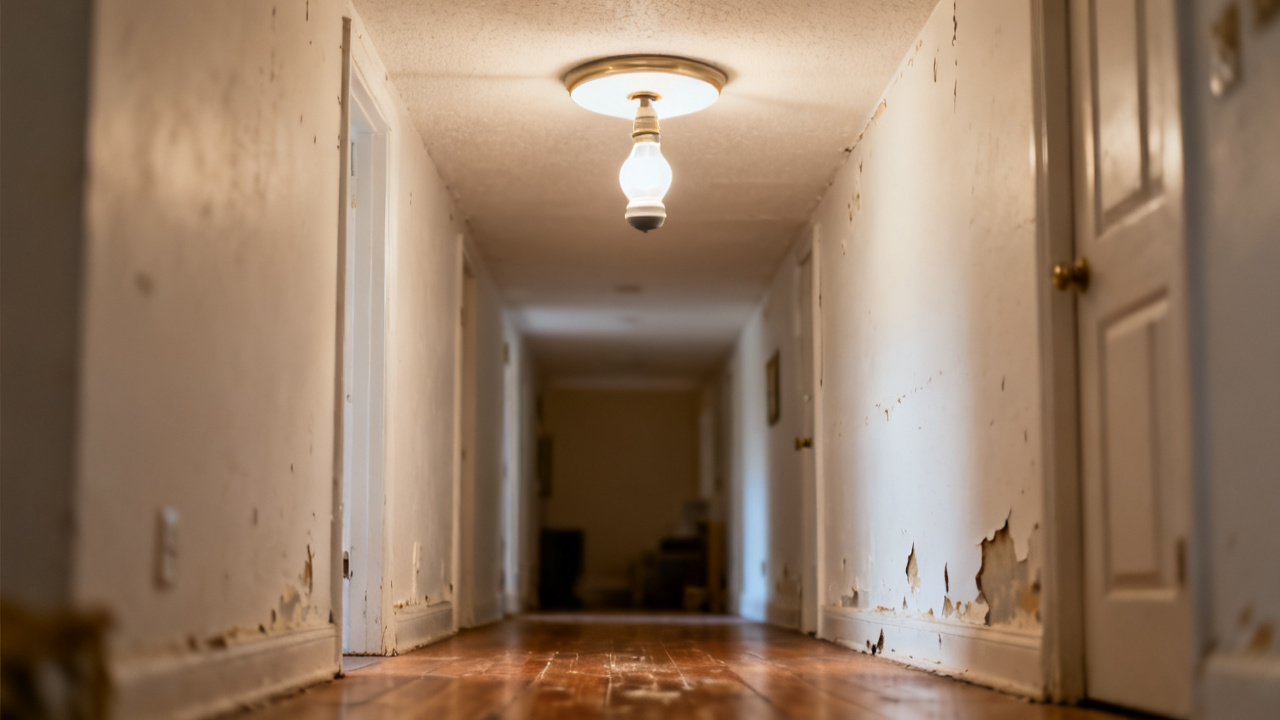
The bulb is in your hand and it is still warm. You have not put it down. You shift your weight on the frayed beige hallway carpet, the faint hum of the building’s HVAC unit thrumming through the walls around you. The empty hall fixture above you hangs open, its plastic cover propped on the windowsill behind you where you set it 30 seconds earlier. You can feel the bulb’s heat seep through the thin cotton gloves you grabbed from the maintenance cart outside your apartment before you started.
Used Bulb Inspection
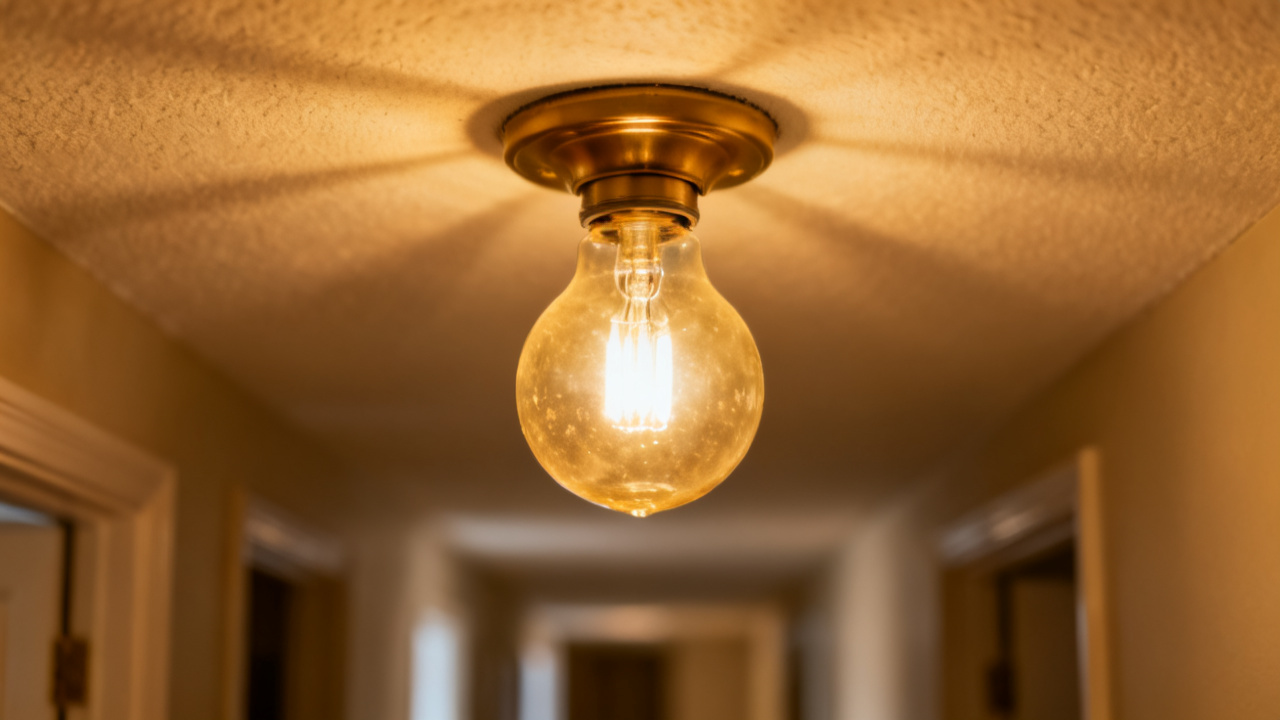
You twist the bulb slowly between your gloved fingers, scanning the frosted glass for hairline cracks or chips that could split as it cools. You hold it up to the faint red glow of the emergency exit sign at the end of the hall, peering through the glass to spot the broken filament floating loose inside, confirming it is fully burnt out rather than just loose in the socket. You avoid squeezing too hard, as warm glass is more malleable than cold glass, and even a tiny crack you miss could shatter if you apply too much pressure. Illustrative example: A standard 60-watt incandescent hall bulb retains enough heat to cause mild surface irritation for up to 11 minutes after being switched off, even if it was only active for 90 minutes before you cut power to the fixture. You already flipped the corresponding breaker in the building’s electrical panel five minutes before you started, so there is no risk of power flowing to the empty fixture while you work, and you don’t touch any of the internal wiring beyond the empty socket you already unscrewed the bulb from. You make a quick mental note that there are no visible defects to the bulb’s base that would indicate a problem with the fixture itself, so you won’t need to flag it for the maintenance team for further review.
Cloth-Wrapped Placement
You need to move the bulb to a safe spot without burning yourself, risking breakage, or leaving it in the middle of the hallway where a neighbor could trip over it if they round the corner unexpectedly. You follow these quick steps to handle it safely:
- Grab the clean microfiber cloth you tucked in your back pocket before starting the job, and fold it twice to create a thick, padded layer that blocks residual heat and adds a buffer against impact if you bump the bulb against a wall.
- Set the bulb in the center of the folded cloth, making sure no part of the warm glass touches the exposed skin of your wrists as you lower it, even through the thin gloves you’re wearing.
- Fold the four corners of the cloth over the bulb to fully enclose it, leaving a small tab of fabric sticking up at the top so you can grab the bundle without touching the glass directly through the cloth layers.
- Lift the bundled bulb by the fabric tab, holding it a few inches away from your body to avoid bumping it against your jeans, the hallway handrail, or the loose baseboard trim that sticks out by the third apartment door.
You take your time with these steps, because dropping a warm bulb could leave tiny, almost invisible shards of glass embedded in the hallway carpet that could cut a neighbor’s bare foot or a pet’s paw later. You make sure the cloth is tight enough that the bulb won’t slip out if you jostle the bundle by accident, but not so tight that you put unnecessary pressure on any small cracks you might have missed during inspection. You pause for half a second to make sure no one is coming down the hall before you start walking toward the supply closet, so you don’t accidentally bump into someone and drop the bundle.
Hall Supply Shelf Storage
You walk the 40 feet down the hall to the small supply closet by the stairwell, the one with chipped light blue paint and a sticker of a cat someone taped to the door handle last month. You twist the handle open, and the battery-powered motion light inside clicks on, casting a cool white glow over the stack of paper towels, cleaning supplies, and unopened replacement bulbs lined up on the shelves. You set the cloth-wrapped bulb on the top shelf, far away from the edge so it won’t roll off and shatter on the concrete closet floor. You leave the top corner of the cloth loose, so anyone reaching for a replacement bulb can see the used glass inside before they grab the bundle, and you scrawl a quick note on a scrap of sticky note that says “warm, used, burnt out” and tuck it under the edge of the cloth. You’ll log the replacement on the Hall Bulb Desk when you get back to your apartment later, so the maintenance team knows the fixture by your door is now working properly. You double check the shelf is stable before you pull the closet door closed, making sure no other supplies are leaning against the bundled bulb that could knock it over after you leave. You wipe a smudge of dust off the closet door handle before you turn back toward your apartment, ready to finish installing the new bulb you left sitting on the windowsill by the open fixture.
Next Fixture Maintenance
The next time you replace a burnt out hall bulb on your floor, you’ll make a few small adjustments to make the job run smoother. You’ll wait an extra three minutes after cutting power to the fixture before you unscrew the bulb, so the residual heat has more time to dissipate, even if you’re wearing work gloves. You’ll also keep a small heat-resistant pouch in your apartment entry table specifically for used bulbs, so you don’t have to rely on a random microfiber cloth from your pocket to wrap it up after you unscrew it. You’ll plan to check the other three hall fixtures on your floor when you replace one, so you don’t have to make multiple trips to the supply closet in the same week if another bulb burns out a day or two later. You’ll also bring a small keychain flashlight with you, so you can check the filament of the used bulb more clearly without holding it up to the dim emergency exit light. You’ll leave a larger, more visible note on the supply closet door if you’re leaving a warm used bulb on the shelf, so even people who don’t look closely at the top shelf first will know to be careful when they reach for replacement supplies. You don’t have a strict schedule for this work, but you check the hall fixtures every time you take your trash out, so you usually catch burnt out bulbs within a day of them going dark, so the hall stays well lit for everyone who lives on your floor. You don’t rush back to the open fixture now, taking an extra second to make sure the closet door is fully latched before you walk back down the hall, the sound of your sneakers soft against the carpet as you go.